
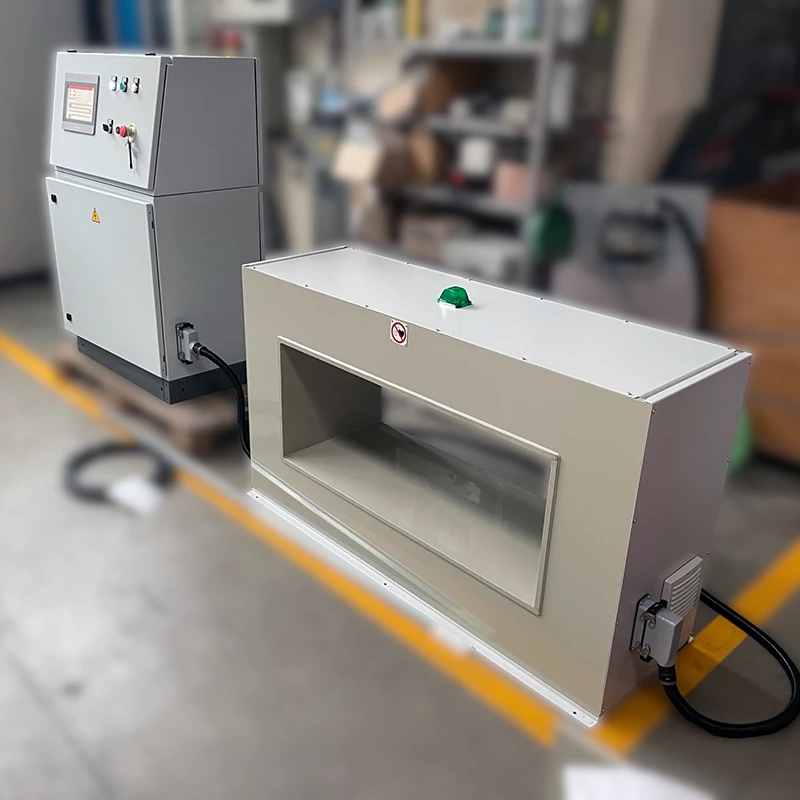
The solution? Our industrial demagnetizer
Using our industrial demagnetizer, steel welding processes will improve and be faster. This equipment drastically reduces the level of residual magnetization of pipes and structures (even large ones), reaching the core of the piece and making it ready for welding. The demagnetizer even works on bundles of pipes: you will optimize your time and save money! Moreover, thanks to the intuitive touchscreen interface you can easily manage all operations.
Source of difficulties in welding steel: the magnetic arc blow
The high residual magnetization makes it difficult to carry out the welding: it occurs a deviation of the arc, called magnetic arc blow.What does this mean? In case of a strong residual magnetism, when the electrons are forced to follow a curved path through the magnetic field, they deflect the arc and cause it to behave erratically. So it becomes difficult or impossible to proceed with a correct welding.
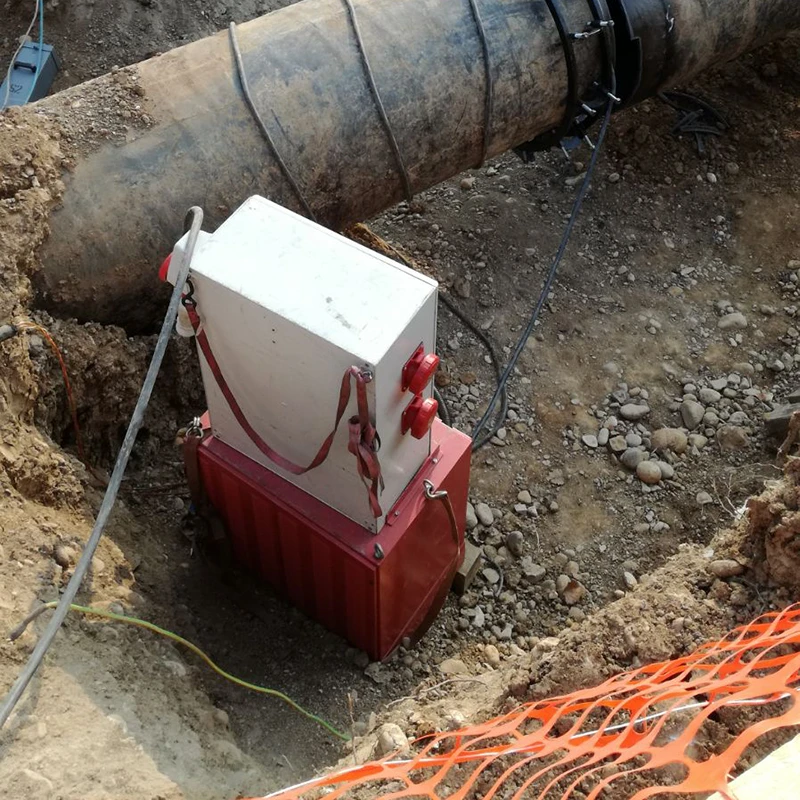
TIG welding steel
TIG welding is very delicate: between 10 and 20 Gauss, the arc becomes unstable. If the level of residual magnetism gets higher, you will have more difficulties: the arc blow occurs between 20 and 40 Gauss, and the situation gets even worse above 40 Gauss.
Manual metal arc welding
Manual metal arc welding is influenced by residual magnetism, especially starting from 20 – 40 Gauss: with these values, the arc becomes unstable. Welding becomes more difficult above 40 Gauss: that’s when the arc blow occurs.
Submerged arc welding
Although less problematic than the other types of welding procedures, submerged arc welding is also affected by residual magnetism, especially when magnetism exceeds 40 Gauss.
Overcome the difficulties in the arc welding of steel!
Demagnetizing your pieces will make your welding process easier: contact now for a consultation.